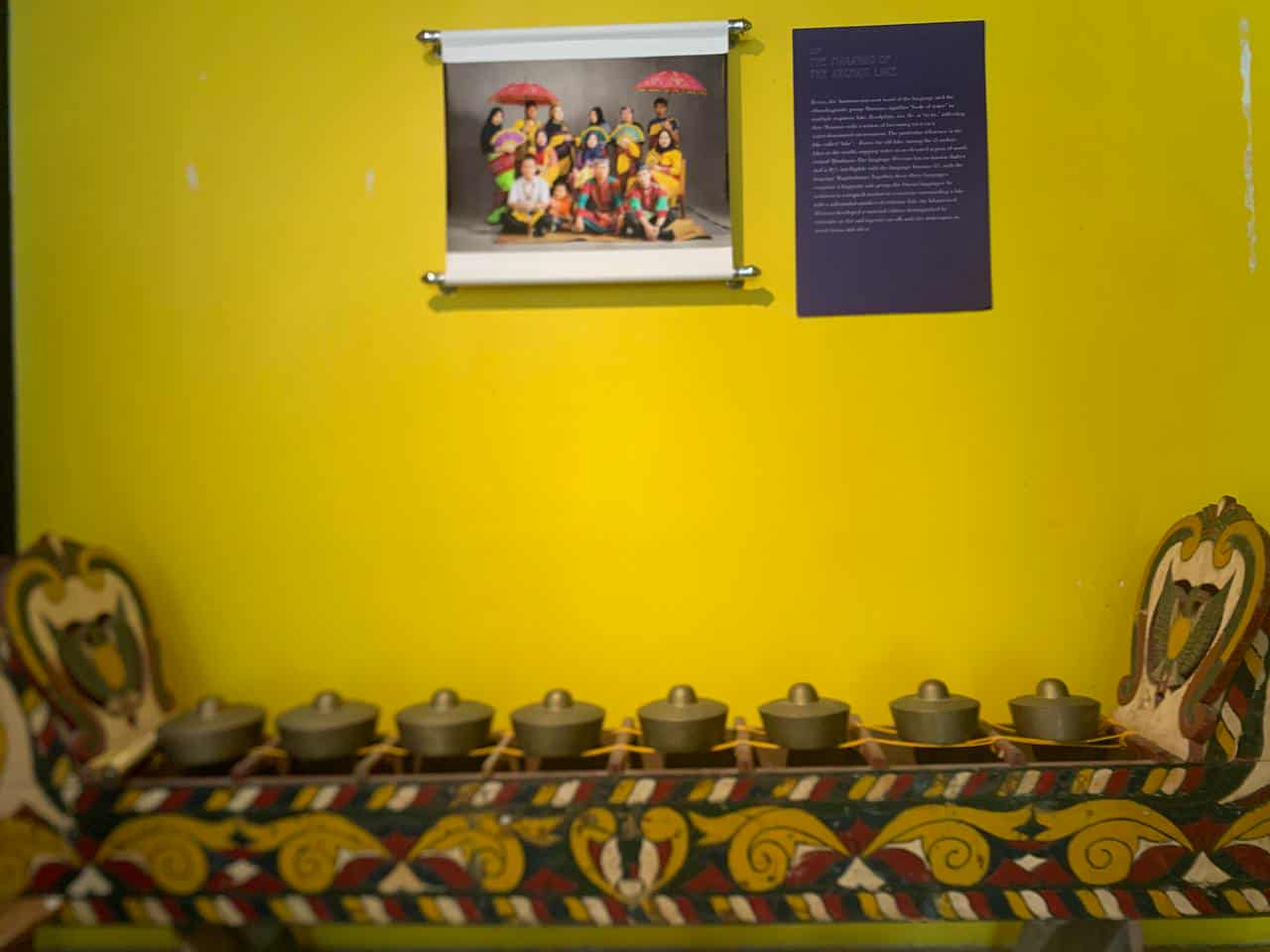
KULINTÁNG ENSEMBLE OF KNOWLEDGES
BARMM ARTIFACTS
While the kulintáng is played by soloists, it is typically at the center of performances by instrument ensembles that include: the large, shallow bossed gongs babendir and gandingam; the deep, enormous agung; and the goblet-shaped drum dbakan. The kulintáng itself pre-dated the the arrival of Islam in the Philippines. The word in fact existed much earlier than the arrival of the bossed gongs, and the learning, by locals. of the casting technique. The sonorous agung has however, alvays been imported into the archipelago from parts of Indonesia. as Filipinos do not cast these giants. The agung is rightly associated with Islamic contributions to local culture, albeit through the mediation of court cultures of the Indonesian archipelago. Hence, the interplay between the kalintang and agung is inevitably the sound of ancient Austronesian modulating Islamic culture, which on many occasions is further innovated upon to become modern.